Blue Yonder Workforce
- 4.5
- Rating
- 500.00K
- Installs
- Free
- Price

 Analysis by App-foxy
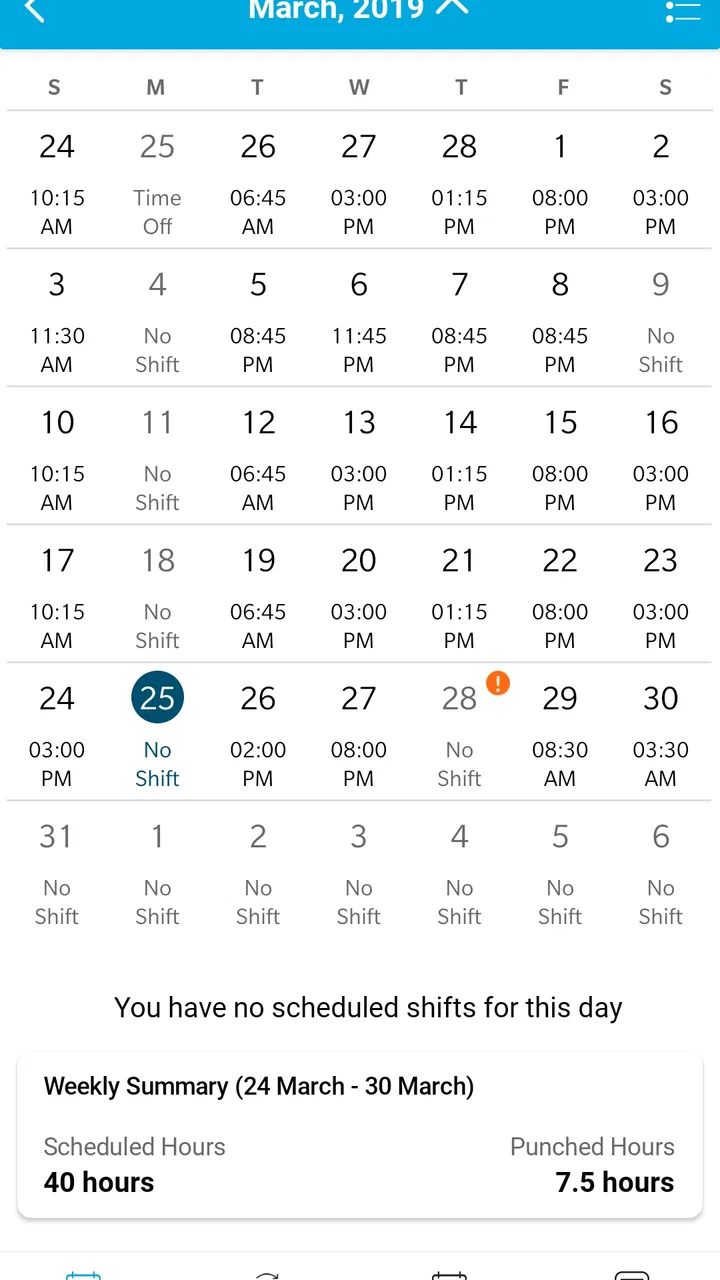
Work schedules and time-off requests are easy to underestimate until they become the source of a missed shift, a forgotten change, or an awkward conversation with a manager. I found Blue Yonder Workforce most useful as a focused workplace companion rather than a broad productivity app. It is built for employees who need to check their schedule and handle time-off requests without relying on paper notices, messages, or repeated trips to a desktop.
The app comes from Blue Yonder Inc. and sits in the business category. It is free to install, rated for Everyone, and currently listed as version 2025.2.3 for devices running iOS or Android version 10 or later. Its average rating is 4.5 from roughly 44 thousand ratings, with more than 500 thousand installs. Those figures suggest that it has found a practical audience, but they do not change the central point: this is a workplace tool whose usefulness depends heavily on how an employer has configured and adopted Blue Yonder.
Turning a scattered schedule into a repeatable routine
I find that a schedule becomes genuinely useful when I turn checking it into a small, predictable habit rather than another thing to monitor all day. That routine also helps me spot when a workplace update calls for a follow-up, instead of assuming the app has settled every question. From there, it is worth looking at how that habit fits into an ordinary week.
You May Also Like

 Blood Strike: 2.5 Anniversary
Blood Strike’s Loadouts Turn Every Drop Into a Tactical Gamble
A close look at Blood Strike’s custom loadouts: how fast access to signature weapons reshapes its battle royale rhythm, rewards preparation, and narrows the gap between fights.

 Pandora - Music & Podcasts
Pandora’s Music Is Easy to Start, but Harder to Recover
Pandora’s strength is its low-effort path from a seed to a station. Its weak spot is how much confidence it asks you to place in connection, setup, and quiet recovery.

 8 Ball Pool
 Is Built on Rivalries, Rematches, and Routine
A close look at the rivalries, rematches, shared routines, and unanswered safety questions that turn a quick pool match into a persistent mobile community.

 Samsung Music
’s Quiet Strength Is Playing What You Already Own
Its reach comes less from spectacle than from dependable access to a personal library. That simplicity is both the app’s strongest retention engine and its ceiling.

 AccuWeather: Weather Radar
AccuWeather Review: A Quick, Clear Forecast for Everyday Decisions
For everyday plans, the best forecast is the one you can understand quickly. AccuWeather makes rain timing, radar, and local conditions easy to act on, with a few trade-offs.

 Hill Climb Racing
Why Hill Climb Racing Still Turns Crashes Into One More Run
A tiny car, a bumpy hill and one more upgrade: Hill Climb Racing keeps resurfacing because its simple chaos makes every near-miss feel personal.
More From Our News Desk



Before using the app, the real problem is usually fragmentation
Before I used a workforce scheduling app, the information I needed was often spread across several places: a printed roster, a noticeboard, a message from a supervisor, and my own memory. That arrangement works when nothing changes. It becomes unreliable when shifts move, availability changes, or a request needs approval while I am away from work.
Blue Yonder Workforce is designed to bring the most important part of that process into one mobile view. I see its strongest role as reducing the number of small decisions around a shift. Instead of asking where the current schedule is or whether a request has been entered, I can use the app as the first place to check. That may sound modest, but it is exactly the kind of small reduction in friction that helps a busy employee protect personal time.
The app is not trying to replace every workplace conversation. A schedule can still require clarification, and a request can still depend on a manager or company policy. What it does is create a more dependable starting point. I would still treat a direct conversation as necessary when a shift looks incorrect or a request is urgent, but I would not want to use conversation as my only record of what was submitted.
What the daily workflow feels like
My preferred routine is simple. I check the schedule at the beginning of the week, look again before leaving for work, and review it whenever I receive a notification or hear about a possible change. The point is not to stare at the app constantly. The point is to make schedule checking a deliberate habit instead of an emergency search.
That habit is especially useful for people with rotating shifts, split responsibilities, or changing weekly availability. A calendar app can remind me that I have work, but it usually does not provide the workplace context that matters, such as the current shift arrangement or the status of a time-off request. A paper roster may be authoritative at one moment, but it is inconvenient when I am away from the workplace. Workforce fits between those two options: more direct than a personal calendar and more accessible than a noticeboard.
I would not describe it as a complete personal planner. It is better at answering “What is my work schedule?” and “What happened to my request?” than at organizing errands, family appointments, or long-term goals. I use a separate calendar for those things. Keeping that distinction clear prevents the app from becoming cluttered with expectations it was never meant to handle.
Capturing time-off needs before they become interruptions
The time-off request workflow is where the app can save the most back-and-forth. If I know I need a day away, entering the request through the workplace system gives it a clear place in the scheduling process. That is more reliable than sending a casual message and hoping it is remembered later.
A useful approach is to submit requests as soon as plans are firm, then return to the app to check their status rather than assuming approval. This is one of the most important practical distinctions for new users: submitting a request is not the same as receiving approval. I would never make travel arrangements or promise availability based only on an entry that still needs a decision.
For recurring personal commitments, I also recommend keeping an outside reminder. Workforce can support the workplace request, but it should not be the only place where I remember a dentist appointment, school event, or family obligation. The best system uses the app for the official work-side action and a personal calendar for the life-side reminder.
That separation creates a useful safeguard. If I remove a personal calendar reminder after submitting a request, I may forget to verify the outcome. If I keep both, one reminds me that I need the time and the other helps me confirm whether the workplace has accepted it.
Organizing the week around the schedule
I get more value from the app when I use the schedule as the foundation for planning rather than checking it only after making other commitments. Once I know when I am working, I can place appointments, exercise, shopping, and rest around those blocks. This is particularly helpful for people whose working hours change from week to week.
There is also a less obvious benefit: checking the schedule before planning transport or childcare. A shift change can affect more than the employee. If I coordinate a ride or arrange care based on an old roster, the inconvenience spreads to someone else. A quick review before confirming those arrangements is a small but worthwhile habit.
I would also take a screenshot or note important details only when company rules allow it and when doing so does not expose private workplace information. The app should remain the primary source, especially if the schedule changes. Personal copies are best treated as reminders, not as permanent replacements for the current schedule.
A repeatable routine that avoids overchecking
The most sustainable way to use Workforce is to attach it to routines that already exist. I would check it once when planning the week, once before the next work period, and after submitting any request. That is enough for many employees without turning schedule checking into a constant distraction.
For a morning shift, the evening check is more useful than opening the app repeatedly during the day. For a late or changing shift, checking after waking may be the better anchor. The right timing depends on the workplace, but the principle is consistent: choose moments when a change would still give you time to react.
I also like to pair a request with a real-world follow-up point. For example, after entering time off, I can add a personal reminder to review the status later. That prevents the common failure where the request is entered correctly but forgotten. The app handles the workplace action; the reminder protects the follow-through.
This routine is more sustainable than trying to remember every detail. It reduces mental load while leaving room for exceptions. If a manager announces a change, I check the app again. If the schedule is stable, I do not need to keep reopening it simply to feel reassured.
Where the workflow can break down
The first failure point is assuming that the mobile schedule is automatically the final answer in every situation. A visible schedule may still need interpretation, particularly if a shift has unusual instructions or a local change has just been communicated. When something looks inconsistent, I would compare it with the latest workplace communication and ask for clarification rather than quietly choosing one version.
The second is treating the app as an instant approval channel. Time-off requests may need review, and the app cannot remove that organizational step. If the request is important or close to the date needed, I would use the app and follow up through the normal workplace contact. That is not a weakness unique to Workforce; it is a reminder that software can record a request without making the decision.
Another point of friction is access. Because this is an employer-connected service, the experience is not the same as downloading a standalone calendar and immediately filling it with events. An employee may need the right workplace setup before the app becomes useful. Someone choosing a workforce tool independently, without an organization using Blue Yonder, should think carefully about that dependency.
Device compatibility matters too. The current version requires an operating system at least as recent as version 10. For many people that is straightforward, but anyone using an older phone should check compatibility before planning around the app. Updating a device is not always practical, so this is a real consideration for employees with aging hardware.
I also would not rely on any single app for urgent communication. If I am due at work soon and the schedule appears wrong, I would contact the appropriate workplace person instead of waiting for the app to resolve the situation. Workforce is strongest as a reliable reference and request channel, not as a substitute for judgment when the consequences of a mistake are immediate.
How it compares with familiar alternatives
The closest alternative is often a paper schedule or a message from a supervisor. Those methods can be fast and familiar, but they are difficult to search, easy to misplace, and awkward when an employee is not on site. Workforce has the advantage of putting schedule access and time-off handling in the same mobile workflow.
A personal calendar is better for combining work with appointments, family events, and reminders. It is also more flexible for planning a whole life. However, it may become outdated unless I manually maintain it, and it may not show the status of a workplace request. I see the two tools as complementary rather than competing. Workforce should hold the employer-facing information; the personal calendar should hold the broader plan.
Messaging is useful for urgent questions and human clarification. It is less suitable as the only record of a request because conversations can be buried, misunderstood, or separated from the schedule itself. The app offers a more structured path for the specific tasks it supports, while messaging remains valuable when something needs explanation.
A general employee-management platform may offer more functions than this app, such as broader human-resources tools or administrative options. That can be better for someone who needs an all-in-one workplace portal. On the other hand, extra sections can make a simple schedule check feel heavier. Workforce appeals to me when the immediate need is focused: see the schedule and manage time-off requests without turning every visit into a full administrative session.
Who will benefit most from adopting it
I would recommend Blue Yonder Workforce to employees whose organizations already use Blue Yonder for scheduling and who want a dependable mobile way to check work commitments. It is especially suitable for people with changing shifts, employees who are frequently away from the workplace, and anyone who has lost time to unclear request status or outdated paper information.
It can also help supervisors and teams indirectly because a clearer request path may reduce avoidable questions. That does not guarantee faster decisions, but it gives employees a more consistent place to begin. The value is greatest when the organization keeps the schedule current and employees are encouraged to use the official workflow.
I would be more cautious about recommending it to someone who only wants a private calendar. If the goal is to organize study sessions, errands, appointments, or personal tasks, a general calendar will be more flexible. I would also hesitate for a worker whose employer does not use Blue Yonder, since the app’s purpose is tied to that workplace connection rather than independent planning.
People who need detailed task management, project collaboration, or personal budgeting should look elsewhere as well. Workforce is not a replacement for those tools. Its narrow focus is a strength when the problem is shift visibility, but a limitation when the user expects a complete productivity suite.
My practical verdict
After using it as part of a weekly planning system, I see Blue Yonder Workforce as a useful, focused business app rather than an app I would open for entertainment or broad organization. Its best contribution is removing uncertainty from two everyday questions: when I am expected to work and whether my time-off request has moved through the workplace process.
The free price and Everyone rating make it approachable, while the established audience and 4.5 average indicate that many users find the basic experience worthwhile. Still, the app cannot compensate for an outdated schedule, unclear company procedures, or a request that needs human approval. Those limits matter, and I would rather state them plainly than present the app as a complete solution.
My recommendation is to adopt it with a simple system: check the schedule at planned times, submit requests early, verify their status, and keep a separate personal calendar for everything outside work. That combination gives the app a clear job and prevents it from carrying responsibilities it was not designed to handle.
For the right employee, Blue Yonder Workforce is a practical way to make work planning less scattered. I would choose it over paper notices or informal messages when the employer supports it, while keeping a personal calendar and direct communication available for broader planning and urgent exceptions. Used that way, it becomes a small but dependable part of a sustainable productivity routine.
FAQs for Blue Yonder Workforce
01What is Blue Yonder Workforce, and what does it do?
Blue Yonder Workforce is a comprehensive workforce management application designed to help businesses streamline scheduling, time tracking, and labor management. It provides real-time insights and analytics to optimize productivity and efficiency while ensuring compliance with labor laws. With features like shift swapping, time-off requests, and notifications, it aims to enhance both employer and employee experiences.
02Is Blue Yonder Workforce user-friendly for both managers and employees?
Yes, Blue Yonder Workforce is designed with a user-friendly interface that caters to both managers and employees. Managers can easily schedule shifts, track time, and manage labor costs, while employees can view their schedules, request time off, and swap shifts with ease. The intuitive design ensures minimal training time and maximizes productivity.
03Does Blue Yonder Workforce integrate with other systems?
Blue Yonder Workforce offers seamless integration with various payroll, HR, and enterprise resource planning (ERP) systems. This ensures that data flows smoothly across platforms, reducing manual entry and minimizing errors. Businesses can customize integrations to suit their specific needs, making it a flexible solution for diverse operational environments.
04What security measures does Blue Yonder Workforce have in place?
Blue Yonder Workforce prioritizes security with robust measures to protect sensitive employee and business data. It includes features such as data encryption, secure user authentication, and regular security audits. The app complies with industry standards and regulations to ensure that your workforce data remains safe and confidential.
05How does Blue Yonder Workforce handle scalability for growing businesses?
Blue Yonder Workforce is designed to scale with businesses of all sizes. Whether you're a small business or a large enterprise, the app can handle increasing numbers of employees and complex scheduling needs. Its cloud-based infrastructure ensures that as your business grows, Blue Yonder Workforce can adapt and expand its capabilities to meet your evolving requirements.
Pros
- User-friendly interface for quick navigation.
- Real-time updates enhance decision-making.
- Customizable notifications for schedules.
- Seamless integration with other systems.
- Robust reporting for workforce analytics.
Cons
- Occasional syncing issues with servers.
- Limited offline functionality.
- Some features require premium access.
- Initial setup can be complex.
- Notifications can be overwhelming.

Blue Yonder Workforce
Gallery